In my research on the "real" blue orchid I have found that the blue orchid is in fact an endangered species, due to the destruction of their natural growing environment. This of course saddens me, and now in my endeavor to make a fake blue orchid. I would also like a chance to help save the blue orchid.
The following website is centered on the blue orchid. The tips they give are very similar to what I do in my own home. http://www.ehow.com/how_2331187_grow-blue-orchids.html I will provide a shortened version here:
Step 1- Chose the correct pot...
Step 2- Chose the correct medium (dirt/soil)
Step 3- Provide appropriate light
Step 4- Feed them every 2 weeks
Step 5- Water
Step 6- Re-pot
Now here's what I do differently than their steps...
In step 1, choosing the correct pot, with my first orchid, I got what was called an "orchid pot" it was a tall, glazed pot with NO drain hole in the bottom. It was also glazed inside and out, making it a smooth surface on the inside. Now it is important to be sure not to water them too much or too often in a pot like this. Standing water will promote root rot.
When I re-pot I also trim off any roots that are rotten looking, or longer than 6-8 inches--now I've read plenty today about not trimming the healthy roots-and I don't go crazy-but my plants don't seem to mind. Also-I don't trim the healthy roots EVERY time I re-pot. So if you are not comfortable with trimming the healthy roots, just concentrate on the yucky ones. But an important part in trimming is be sure to use a CLEAN SHARP EDGE. you do not want to introduce bacteria into your orchid.
Healthy Roots = Healthy Plants.
Now back to the "real" blue orchids....
The best known wild blue orchids are:
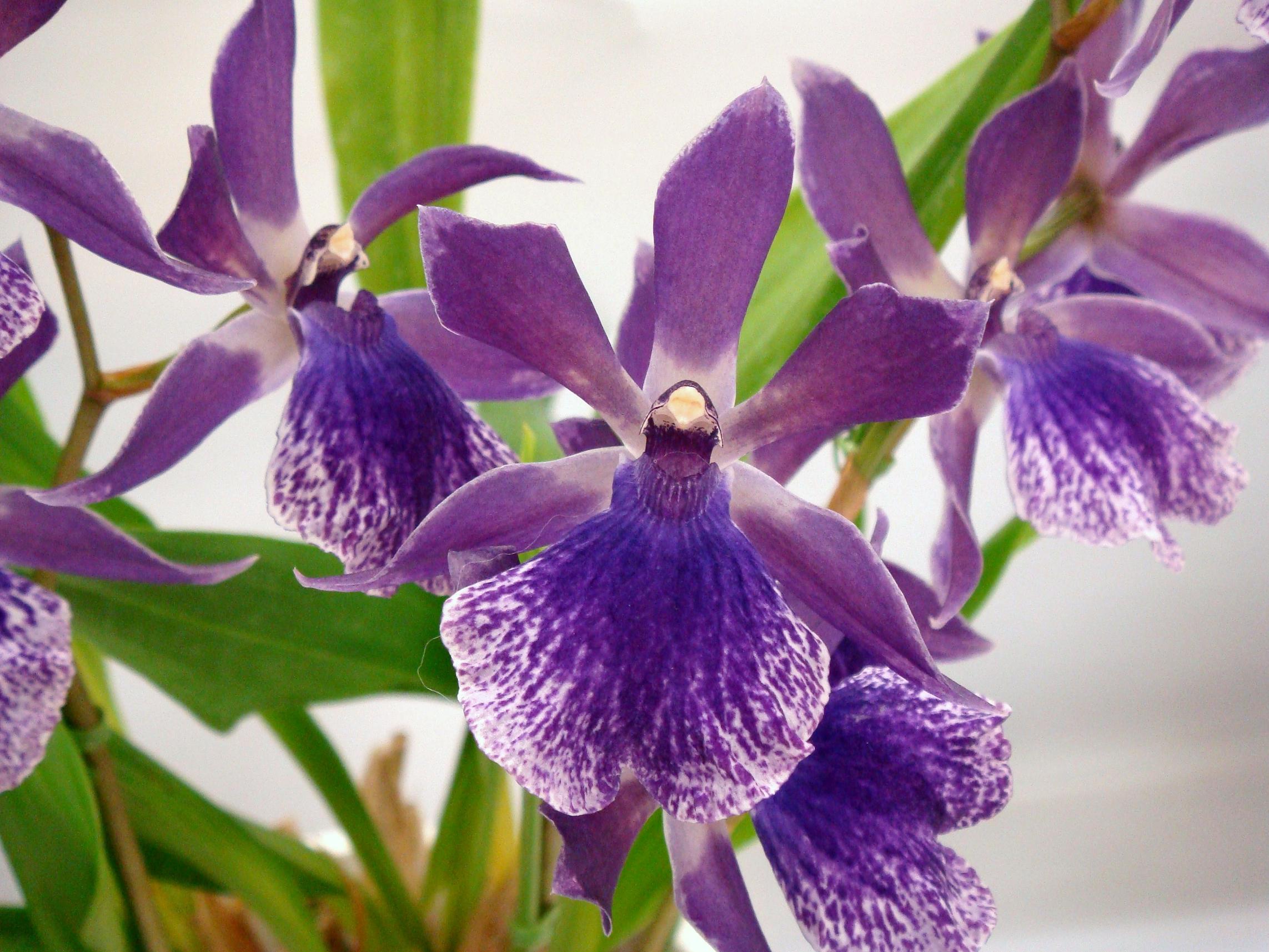 Acacallis Cyanea
A native to the upper Amazon Basin.
This plant can be grown in conditions similar
to Phalaenopsis Orchid (the most common orchid found today)

Cattleya
Native to Costa Rica
Cattleya has thousands upon thousands of
registered hybrids.

Dendrobium
Native to Southeast Asia
These need more light, and more water , and
more fertilizer than the common Phalaenopsis.

Thelymitra Pauciflora
Native to Australia and New Zealand
Called the Slender Sun Orchid

Vanda Coerulea
Native to Thailand
Can be grown in baskets.
Flowering is irregular and rare
Beautiful aren't they? Now I wish I had my own! Preferably the Dendrobium.
Now I am on a new mission.
Tomorrow-Why food coloring changes the color of a plant!

No comments:
Post a Comment